
A free hit in cricket is one of the most exciting moments in limited-overs matches. It gives the batter a valuable opportunity to attack the bowler with less risk of losing their wicket. This rule often creates high-pressure situations, especially during the final overs of an ODI or T20 match.
Understanding free hit rules helps cricket fans know when a free hit is awarded, which dismissals are still possible, and what happens when the ball hits the stumps. This guide covers when a free hit is awarded, the dismissals still possible, the scoring rules and the differences between limited-overs and Test cricket.
What Is a Free Hit in Cricket?
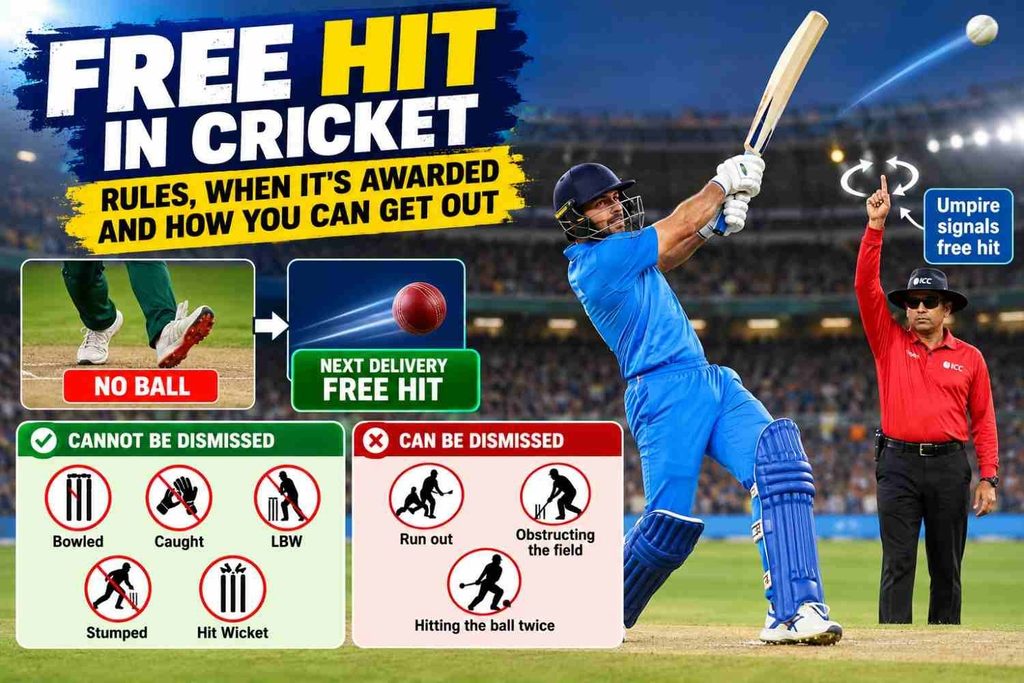
A free hit in cricket is a special delivery awarded to the batting team after a no-ball in limited-overs cricket. It protects the striker against most conventional methods of dismissal, allowing them to attack with less risk of losing their wicket.
The International Cricket Council (ICC) includes the free-hit provision in its limited-overs playing conditions. Under standard international ODI and T20I rules, the delivery following a no-ball is a free hit, regardless of the type of no-ball called. If the free-hit delivery is itself a no-ball or a wide, the next delivery remains a free hit.
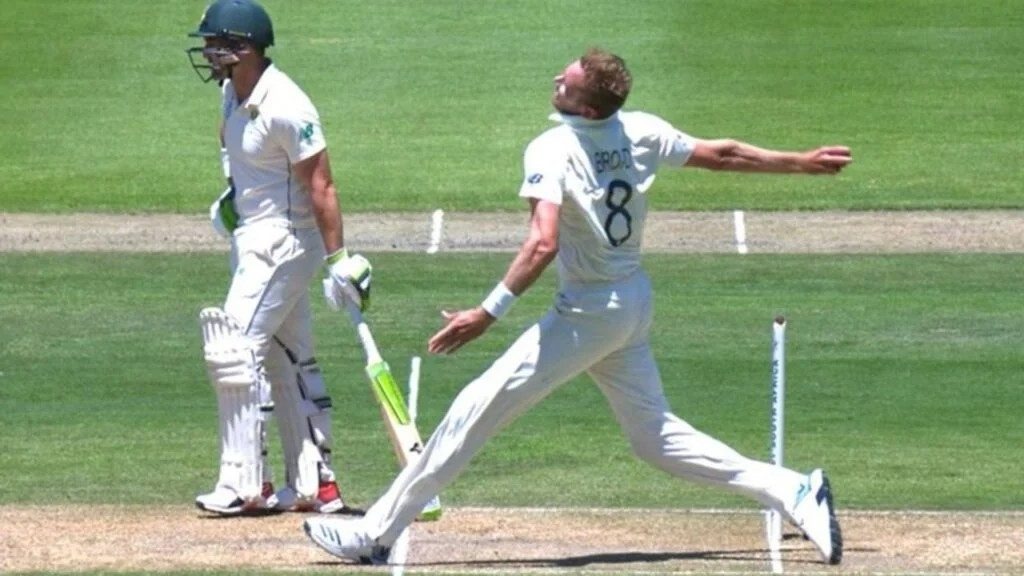
For example, if a bowler oversteps the popping crease, the umpire calls a no-ball and awards the batting team the applicable penalty. The next delivery becomes a free hit, on which the striker cannot be dismissed bowled, caught or LBW.
Key points about a free hit:
- It follows a no-ball in formats that use the free-hit provision.
- The batting team receives the applicable no-ball penalty.
- The striker is protected against most conventional dismissals.
- The free hit continues until a legitimate delivery is bowled.
When Is a Free Hit Awarded in Cricket?
A free hit is awarded after a no-ball in limited-overs matches that follow the relevant playing conditions. It is not restricted to a bowler overstepping the crease.
1. Front-Foot No-Ball
A front-foot no-ball occurs when the bowler illegally oversteps the popping crease during delivery. It is one of the most familiar reasons for a free hit in international limited-overs cricket.
2. Dangerous High Full Toss
A dangerous high full toss can be called a no-ball when it breaches the applicable playing conditions. The next delivery then becomes a free hit.
3. Other Types of No-Ball
Other infringements can also result in a no-ball, including back-foot faults and certain fielding-restriction breaches.
The ICC’s limited-overs playing conditions specify that a free hit follows a no-ball called for any mode covered by the provision. An illegal bowling action identified through the reporting and review process is not automatically the same as a no-ball called during a delivery.
Free Hit Rules in Cricket: What Players Must Know
The free-hit rule changes the risk of dismissal, but it does not remove every rule of cricket.
The Batter Cannot Be Dismissed in the Usual Ways
On a free hit, the striker cannot be dismissed bowled, caught, LBW, stumped or hit wicket. These restrictions follow the provisions that apply when a no-ball is called.
The Next Delivery Must Be Legal
If the bowler delivers another no-ball or a wide on the free hit, the free hit carries forward to the next delivery. The batting team retains the opportunity until a legitimate delivery is bowled.
Field Changes Are Restricted
The fielding team generally cannot change the field or exchange fielders between positions for a free-hit delivery. Exceptions apply when the striker changes or when the original no-ball resulted from a fielding-restriction breach and the field needs to be corrected.
The Bowler Can Change the Mode of Delivery
The bowler may change the mode of delivery for the free hit, provided the change complies with the applicable playing conditions.
The Umpire Signals the Free Hit
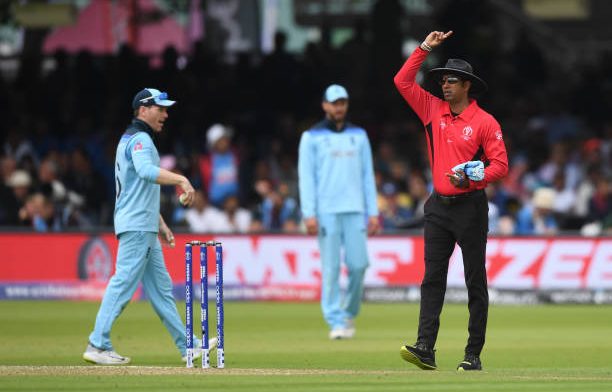
After signalling the no-ball, the umpire indicates a free hit by extending one arm upwards and moving it in a circular motion.
History of the Free Hit Rule in Cricket
The free-hit rule developed through changes to limited-overs playing conditions intended to penalise no-balls more effectively.
| Year | Development |
| 2007 | The ICC introduced free hits in ODIs following front-foot no-balls, effective from October 2007. |
| 2012 | The ICC confirmed that ODI free hits also applied to back-foot foot-fault no-balls. |
| 2015 | The provision was extended to all modes of no-ball under the relevant limited-overs playing conditions. |
The rule’s scope expanded over time. Consequently, older scorecards may reflect different free-hit conditions from those used in modern international cricket.
The free-hit rule was introduced in limited-overs cricket in October 2007, initially applying to front-foot no-balls. The rule was later extended to cover other types of no-balls in limited-overs formats.
How Can You Get Out on a Free Hit?
A free hit does not guarantee that the batter will survive the delivery. Under the standard ICC limited-overs playing conditions, the striker can be dismissed in the three ways permitted when a no-ball is called.
| Dismissal | Possible on a free hit? | Explanation |
| Bowled | No | The ball can hit the stumps without dismissing the striker. |
| Caught | No | A fielder can catch the ball, but the striker is not out caught. |
| LBW | No | The striker cannot be dismissed leg before wicket. |
| Stumped | No | The striker cannot be dismissed stumped. |
| Hit wicket | No | The striker cannot be dismissed hit wicket. |
| Run out | Yes | Either batter can be run out under the normal run-out rules, including the non-striker at the bowler’s end. |
| Hit the ball twice | Yes | A batter can be dismissed for a prohibited second strike under the Laws of Cricket. |
| Obstructing the field | Yes | A batter can be dismissed for unlawfully obstructing or distracting the fielding side. |
The key distinction is that the striker remains protected from conventional dismissals, but both batters must still follow the rules governing running between the wickets, conduct and interference with fielders.
Under ICC limited-overs playing conditions, Clause 21.19 covers free hits, while Clause 21.18 sets out the dismissal restrictions that apply when a no-ball is called.
What Happens If the Batter Is Bowled on a Free Hit?
If a bowler hits the stumps during a free hit, the striker is not out bowled. The ball remains in play unless the umpire calls it dead, so the batters may attempt to score runs.
From 1 June 2023, runs scored when a free-hit delivery hits the stumps count as team runs rather than byes. This explains why Virat Kohli’s three runs in the 2022 India–Pakistan match were recorded as byes under the rules in force at that time.
Virat Kohli’s Famous Free-Hit Incident
A memorable example occurred during the India–Pakistan match at the Melbourne Cricket Ground on 23 October 2022 in the ICC Men’s T20 World Cup.
Mohammad Nawaz bowled a waist-high full toss that Virat Kohli hit for six. The delivery was called a no-ball, leaving India needing 13 runs from three balls before the extra delivery was bowled. Nawaz then bowled a wide, so the free hit carried forward.
On the next delivery, Kohli missed his attempted sweep and the ball hit the stumps. Because it was still a free hit, he was not out bowled. Kohli and Dinesh Karthik ran three byes, with the ball rolling between the wicketkeeper and short third.
Kohli eventually finished unbeaten on 82 off 53 balls as India won the match. Karthik was stumped on the next delivery, and Ravichandran Ashwin secured the victory on the final ball.
The three byes recorded in this 2022 scorecard reflect the scoring treatment in force at the time.
Does a Free Hit Apply in Test Cricket, ODI and T20?
The free-hit rule is used in limited-overs cricket under the relevant playing conditions. It is not part of standard Test cricket playing conditions.
| Match format | Free hit after a no-ball? |
| Test cricket | No standard free hit |
| One Day International | Yes |
| T20 International | Yes |
| Indian Premier League | Yes, under the competition’s playing conditions |
| Domestic T20 competitions | Depends on the applicable playing conditions |
Myth-buster: Test cricket does not have a standard free hit. Although the usual no-ball dismissal restrictions still apply to the no-ball itself, the next delivery is not a free hit under standard Test playing conditions.
Does a Free Hit Carry Into the Next Over?
Yes. If a free hit is the final delivery attempted in an over but the ball is a no-ball or a wide, the free hit carries forward to the next delivery.
If the over ends, the next free hit is bowled from the other end by the bowler scheduled to bowl the next over.
The batter facing the next delivery receives the free hit.
Why Is a Free Hit Important in Cricket?
A free hit can change the momentum of an over. Since the striker is protected against most conventional dismissals, the batter can target gaps, hit boundaries or attempt a six.
For the bowling team, the challenge is to limit the damage. Bowlers may use yorkers, slower deliveries or changes of pace, depending on their skills and the match situation. They must still bowl legally and avoid offering an easy scoring opportunity.
Captains also need to consider field restrictions because field changes are limited for free-hit deliveries. The rule can therefore influence scoring and tactical decisions, particularly during the final overs of an ODI or T20 innings.
Conclusion
A free hit in cricket gives the striker an important advantage after a no-ball in limited-overs matches. The batter cannot be dismissed by conventional methods such as bowled, caught, LBW, stumped or hit wicket, but run out, hitting the ball twice and obstructing the field remain possible.
The free hit also carries forward if the delivery is another no-ball or a wide. Understanding the rule’s history, dismissal restrictions and updated scoring treatment helps cricket fans follow unusual incidents and crucial moments in ODI and T20 matches.
Frequently Asked Questions About Free Hits in Cricket
A free hit has no fixed run value. The batter can score zero, one, two, three, four or six runs, depending on the delivery and the shot. Additional runs may be awarded under the applicable scoring rules.
No. The striker cannot be dismissed caught on a free hit. The ball may remain in play, allowing the batters to attempt runs.
Yes. Run out is one of the dismissal methods permitted under the free-hit restrictions. Either batter, including the non-striker at the bowler’s end, can be run out according to the Laws of Cricket.
The free hit carries forward to the next delivery. The batting team retains the free-hit opportunity until a legitimate delivery is bowled.
No. A free hit is not part of standard Test match playing conditions. The provision applies in limited-overs formats such as ODIs and T20Is.