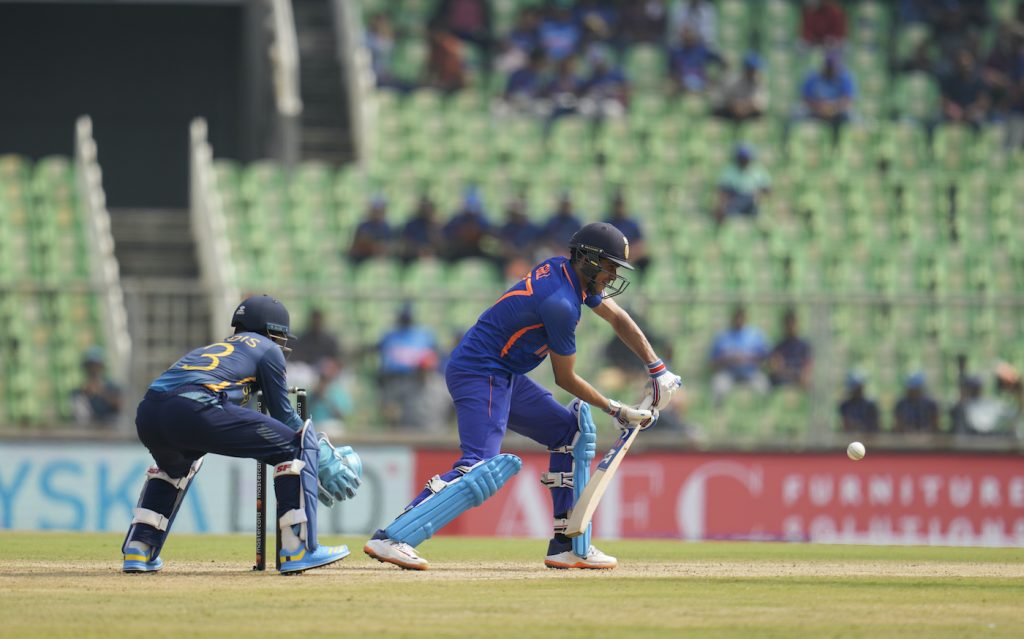

ODI stands for One Day International, a format of cricket in which two international teams compete in a match scheduled to be completed in one day. In a standard men’s ODI, each team can bat for a maximum of 50 overs. The team that scores more runs wins the match, subject to the playing conditions and any interruptions caused by weather.
ODI cricket combines batting technique, bowling control, fielding skills and strategic decision-making. Unlike Test cricket, it does not extend across several days. Unlike T20 International cricket, it gives teams 50 overs to build an innings, recover from setbacks and plan a strong finish.
What Is ODI in Cricket?
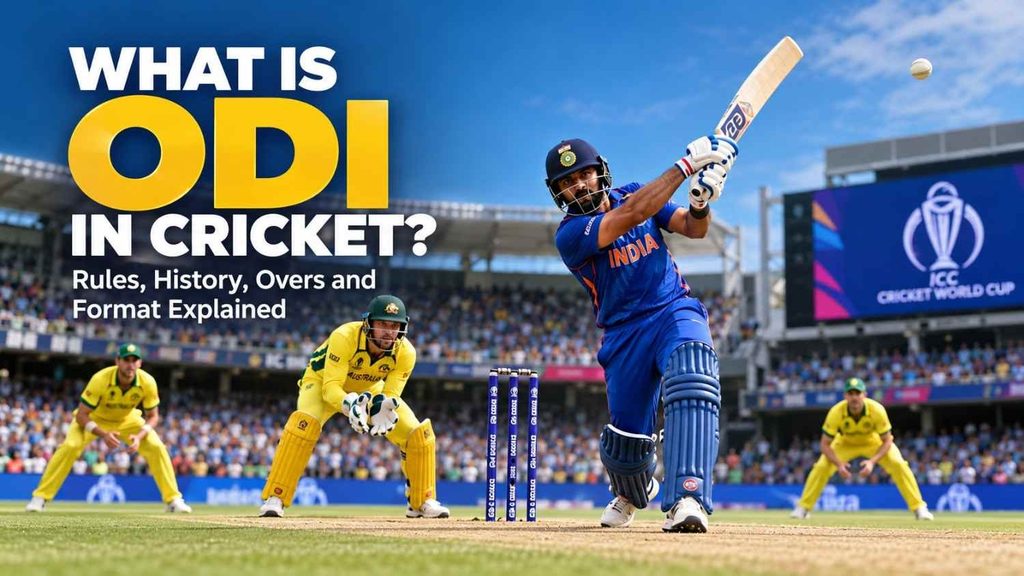
ODI means One Day International. It is an international limited-overs format in which each team normally plays one innings of up to 50 overs.
Each side has 11 players. One team bats first and attempts to score as many runs as possible. The other team bowls and fields to restrict the score and dismiss the batters. The teams then exchange roles.
The team batting second aims to pass the first team’s total to win. If it reaches the target with wickets remaining, it wins the match. If it falls short after its innings ends, the team batting first wins. A match can also end in a tie if both teams finish with equal scores, or as a no result if the playing conditions for a completed result are not met.
ODIs are played by men’s and women’s international teams. ODI status is granted to eligible international teams under the relevant ICC regulations. The standard men’s ODI format consists of 50 overs per innings, although the precise conditions depend on the applicable competition regulations.
How Many Overs Are There in ODI Cricket?
A standard ODI gives each team a maximum of 50 overs. Since one over contains six legal deliveries, a full innings normally consists of up to 300 legal balls.
Here is a simple breakdown:
| Match detail | ODI rule |
| Overs per team | Maximum 50 |
| Legal balls per full innings | 300 |
| Players per team | 11 |
| Innings per team | One |
| Scheduled duration | One day |
| Main objective | Score more runs than the opposition |
| Premier men’s tournament | ICC Men’s Cricket World Cup |
An innings can finish before 50 overs if the batting team loses all its wickets. For example, if India scores 275 runs in 50 overs, Australia needs 276 runs to win. If Australia reaches 276 before its innings ends, it wins. If Australia finishes on 275 after being all out or exhausting its allocated overs, the match is tied.
Rain can reduce the number of overs available. In such cases, officials apply the relevant playing conditions, which may include the Duckworth-Lewis-Stern (DLS) method to revise the target.
History of ODI Cricket
ODI cricket began on 5 January 1971 at the Melbourne Cricket Ground in Australia. The match took place between Australia and England after rain disrupted a scheduled Test match. Instead of continuing with the abandoned Test, the teams played a one-day international fixture.
The inaugural match was different from today’s standard format. Each team played 40 overs of eight balls each. Australia won by five wickets.
The format gradually attracted more attention during the 1970s. Coloured clothing, white balls, floodlit matches and television coverage helped make one-day cricket more appealing to spectators. These developments were influenced in part by the growth of World Series Cricket.
The first men’s Cricket World Cup took place in England in 1975. It helped establish ODI cricket as a major international format. Over time, teams developed new batting approaches, bowling variations and fielding strategies to make the most of limited overs.
The modern 50-over format became a defining part of international cricket. Today, ODIs remain an important stage for international competition, particularly during the Cricket World Cup.
What Are the Main Rules of ODI Cricket?
ODI cricket follows the Laws of Cricket along with the specific playing conditions established for international matches. The following rules explain how a standard men’s ODI works.
1. Batting and Scoring Runs
The batting team tries to score runs by hitting the ball, running between the wickets and striking boundaries.
A batter earns four runs when the ball reaches the boundary after touching the ground inside the field. A six is awarded when the ball crosses the boundary without first touching the ground. Runs can also come from running between the wickets and from extras such as wides and no-balls.
2. Bowling and Taking Wickets
The bowling team attempts to dismiss the batters and limit the scoring rate. Common methods of dismissal include being bowled, caught, run out, leg before wicket and stumped.
Each bowler has a limit on the number of overs they can deliver in a standard ODI. Under the usual men’s ODI conditions, a bowler may bowl no more than 10 overs in a full 50-over innings, subject to the applicable regulations.
An important rule concerns no-balls. In an ODI, a no-ball is followed by a free hit. On the free-hit delivery, the batter is protected from most dismissals that would apply on a legal delivery, although dismissals such as run out remain possible under the relevant rules. If the free-hit delivery is itself a no-ball or wide, the next delivery is also a free hit.
3. Powerplay Rules
Powerplays are periods when restrictions apply to the placement of fielders outside the designated 30-yard fielding circle. They affect how captains arrange their field and how batters approach scoring.
Under the standard men’s ODI conditions, the 50 overs are divided into three phases:
| Powerplay phase | Overs | Maximum fielders outside the 30-yard circle |
| Powerplay 1 | 1–10 | 2 |
| Powerplay 2 | 11–40 | 4 |
| Powerplay 3 | 41–50 | 5 |
These restrictions create different tactical challenges. Batters often look for scoring opportunities during the opening overs, while bowlers may focus on early wickets. During the middle overs, teams balance run-scoring with wicket preservation. The final overs often bring aggressive batting as the innings approaches its conclusion.
The exact application of fielding restrictions depends on the relevant playing conditions, especially in shortened matches.
4. Two-Ball Rule in ODI Cricket
A significant change to men’s ODI cricket took effect on 2 July 2025. The rule changed how the two new balls are used during an innings.
The current arrangement works as follows:
- Overs 1–34: The bowling team uses two new balls, alternating between the two ends.
- Overs 35–50: After the 34th over, the fielding team chooses one of the two balls. That ball is then used at both ends for the remainder of the innings, unless it needs to be replaced.
- Matches reduced to 25 overs or fewer per side: If the match is reduced to 25 overs or fewer before the first innings begins, each team uses only one new ball for its innings.
Previously, two new balls were used throughout an ODI innings, one from each end. The change was introduced to help restore the balance between bat and ball by allowing the ball to become older during the closing overs, creating more opportunities for reverse swing and other bowling variations.
5. What Happens When Rain Interrupts an ODI?
Rain can shorten an ODI or prevent it from being completed. When the match is reduced, officials apply the relevant regulations to determine the revised overs and target.
The Duckworth-Lewis-Stern method is commonly used in limited-overs cricket to calculate revised targets. It considers the resources available to each team, including overs remaining and wickets in hand.
Under standard men’s ODI playing conditions, the team batting second generally needs to face at least 20 overs for a rain-affected result to be determined using DLS, unless the result is achieved earlier. If the minimum requirements for a result are not met, the match may be declared a no result. The precise outcome depends on the applicable competition regulations and circumstances.
6. How Are Tied ODI Matches Decided?
An ODI is tied when both teams finish with the same score under the applicable result conditions. A tie is different from a win by a narrow margin: neither team has scored more runs.
In ICC events and many bilateral competitions, a Super Over may be used to determine the winner, provided the competition’s playing conditions require it. Each team faces one over, and the team scoring more runs wins. If the Super Over is also tied, further Super Overs may be played under the applicable rules.
The procedure can vary between competitions, so the relevant tournament or series regulations determine how a tied match is resolved.
Difference Between ODI, Test and T20 Cricket
International cricket has three main formats: Test matches, One Day Internationals and Twenty20 Internationals. Each format requires a different balance of patience, attacking play and tactical planning.
| Feature | Test cricket | ODI cricket | T20 International |
| Standard duration | Up to five days | One scheduled day | About three hours |
| Overs per innings | No fixed limit | Up to 50 | Up to 20 |
| Innings per team | Usually two | One | One |
| Batting approach | Patience and technique | Balance of control and aggression | Fast scoring |
| Main international event | ICC World Test Championship | ICC Men’s Cricket World Cup | ICC Men’s T20 World Cup |
The central difference is the time and overs available. Test cricket rewards endurance and consistency over long periods. ODI cricket requires teams to adapt their strategy as the innings develops. T20 cricket places greater emphasis on scoring quickly within a shorter period.
For readers learning cricket, ODI is often a useful format to understand because it includes traditional batting and bowling skills alongside modern attacking tactics.
Why Is ODI Cricket Important?
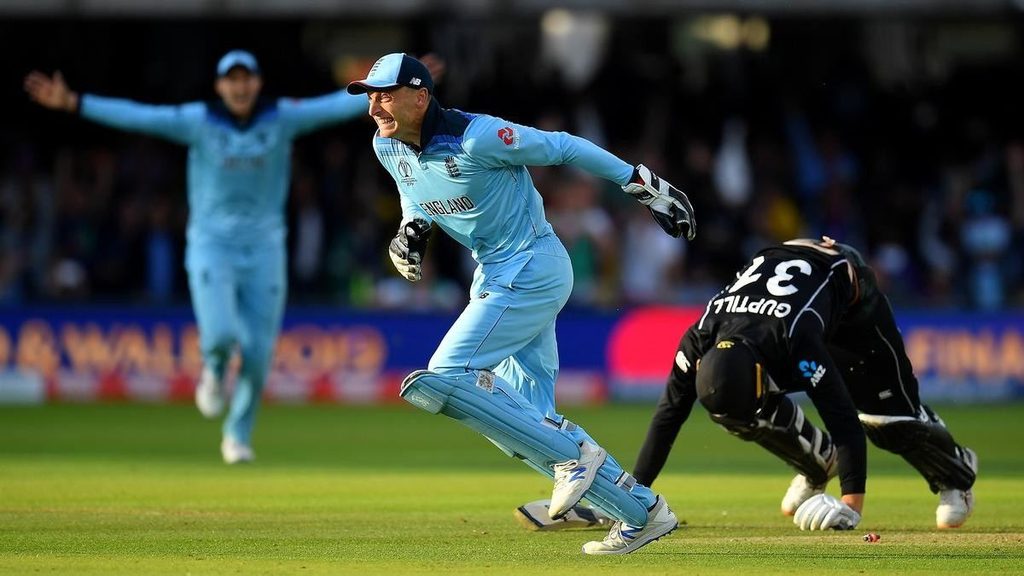
Image Source: Cricket Times
ODI cricket has played a major role in the development of international cricket. It offers a balance between the longer Test format and the shorter T20 format.
The format gives batters enough time to build centuries and partnerships while challenging bowlers to defend a score over 50 overs. Captains must decide when to attack, when to protect wickets and which bowlers to use at crucial stages.
The Cricket World Cup also gives ODI cricket enormous international significance. Teams compete over a tournament to become world champions, creating opportunities for memorable performances and rivalries.
For players, strong ODI performances can establish reputations for consistency, adaptability and match awareness. For spectators, the format offers a complete contest that can change direction several times during a single match.
What Makes a Good ODI Team?
A successful ODI team needs more than powerful batters. It must perform well in every department.
- Strong opening batters: Openers should make the most of the initial fielding restrictions while avoiding unnecessary risks.
- Reliable middle order: Middle-order batters must rebuild an innings after wickets fall and accelerate when conditions allow.
- Effective death bowling: Bowlers need accurate yorkers, slower deliveries and other variations to limit scoring in the final overs.
- Quality fielding: Saving singles and boundaries can make a substantial difference in a close match.
- Smart captaincy: Captains must manage bowling changes, field placements and batting decisions according to the match situation.
The strongest sides combine these skills rather than relying on one star player. In a 50-over match, a partnership, a spell of economical bowling or an outstanding fielding effort can change the result.
Conclusion
ODI stands for One Day International, a limited-overs format in which two international cricket teams usually play one innings of up to 50 overs each. The format began in 1971 and has grown into a major part of international cricket, with the ICC Men’s Cricket World Cup serving as its flagship men’s tournament.
Understanding the overs, scoring rules, powerplays, two-ball rule and differences between Test, ODI and T20 cricket makes it easier to follow a match. ODI cricket continues to reward teams that combine disciplined batting, effective bowling, sharp fielding and intelligent strategy.
Frequently Asked Questions About ODI Cricket
ODI stands for One Day International. It is an international limited-overs cricket format in which each team normally has up to 50 overs to bat.
In a standard ODI, each team can bat for a maximum of 50 overs. An innings may end earlier if the team is all out, and rain or other interruptions can reduce the overs available.
Each team has 11 players. During a match, one team bats while the other bowls and fields. The teams then exchange roles.
The first ODI was played on 5 January 1971 between Australia and England at the Melbourne Cricket Ground. Australia won the match by five wickets. The game used 40 overs of eight balls per side, unlike the standard format today.
An ODI allows each team up to 50 overs, while a T20 International allows up to 20 overs per team. ODI matches offer more time to build an innings, whereas T20 matches demand faster scoring and more aggressive tactics